The sky
Lunar Eclipse Dates for 2026, 2027 and 2028, and the Next Blood Moon
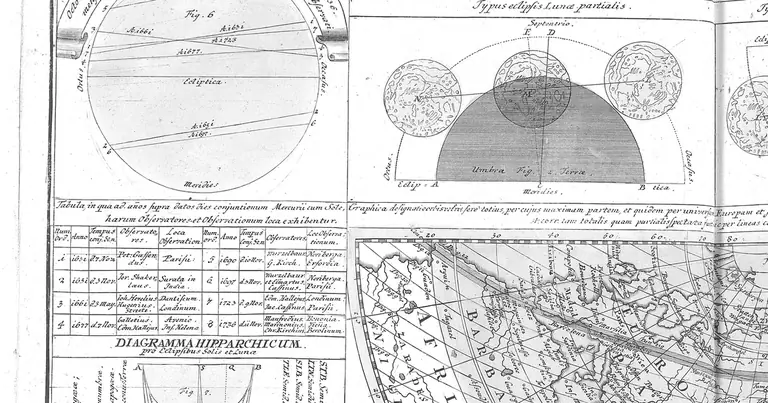
The first lunar eclipse of 2027 is a penumbral one on Saturday, February 20. By our calculation greatest eclipse comes at 23:12 UTC, which is 6:12 p.m. EST in New York, and the Moon is above the horizon there at that moment. Los Angeles does not see it. The shading is slight and easy to miss, and it is not a blood moon. The next total lunar eclipse, the red Moon people mean by "blood moon", falls on December 31, 2028, at 16:51 UTC (11:51 a.m. EST). The Moon is below the horizon in New York for all of it, and in Los Angeles it sets during the faint early phase, before totality. Below is every lunar eclipse from 2026 to 2028, with times and what each one looks like from New York and Los Angeles.
- Annular solar eclipse: February 6 at 10:59 AM
- Penumbral lunar eclipse: February 20 at 06:12 PM
- Penumbral lunar eclipse: July 18 at 12:02 PM
- Total solar eclipse: August 2 at 06:06 AM
- Penumbral lunar eclipse: August 17 at 03:13 AM
What a lunar eclipse is
A lunar eclipse happens at a full moon when the Moon passes through Earth's shadow. It needs the Moon to be close to a lunar node, one of the two points where its orbit crosses the plane of Earth's orbit around the Sun. At most full moons the Moon passes just above or below the shadow, which is why there is no eclipse every month. The eclipse glossary entry has the geometry.
Earth's shadow has two parts: a pale outer zone called the penumbra and a dark core called the umbra. Which parts the Moon crosses decides the type.
- Total: the whole Moon enters the umbra. The phase when it is fully inside is called totality, and the Moon often turns red. This is the "blood moon".
- Partial: only part of the Moon enters the umbra, so a dark bite appears on one side of the disk.
- Penumbral: the Moon stays in the outer shadow and never touches the umbra.
A lunar eclipse is visible from the whole night side of Earth, wherever the Moon is above the horizon. A total solar eclipse, by contrast, is seen only along a narrow strip. Our solar eclipse 2027 guide covers the other kind.
Why the Moon turns red
In totality the Moon sits inside Earth's shadow, and the only sunlight that reaches it has passed through Earth's atmosphere on the way. The air bends that light inward, and it scatters out most of the blue and keeps the red, as it does at every sunrise and sunset. In effect, the Moon is lit by all the sunrises and sunsets on Earth at once. Dust and cloud in the air that night decide how dark the color is.
Why penumbral eclipses are hard to notice
In a penumbral eclipse the Moon dims only slightly. The outer shadow takes away part of the sunlight, but never all of it, and the change is gradual, with no sharp edge to see. Most observers notice nothing at all by eye. At the deepest moment a faint gray tinge may show on one edge of the disk. One number tells you how deep an eclipse runs: the umbral magnitude, which is the fraction of the Moon's width inside the umbra. A penumbral eclipse has a negative value, because the Moon never reaches the umbra.
2026: March 3 and August 28
Both lunar eclipses of 2026 are already past. The first was a total lunar eclipse, the blood moon of 2026, on Tuesday, March 3. By our calculation greatest eclipse came at 11:33 UTC, 6:33 a.m. EST in New York, with an umbral magnitude of 1.156. Totality lasted about 59 minutes. In New York the Moon was still above the horizon at the start of totality at 11:04 UTC (6:04 a.m. EST) but had set by the time of greatest eclipse. Los Angeles saw the whole of totality, and Europe and the Middle East saw none of it because the Moon was down.
The second was a partial lunar eclipse on Friday, August 28. Greatest eclipse came at 04:13 UTC, which was 12:13 a.m. EDT in New York, with an umbral magnitude of 0.934, so the umbra covered nearly all of the Moon. The partial phase lasted about 3 hours 19 minutes. By our calculation the Moon was above the horizon in New York for the whole eclipse and in Los Angeles from the first partial contact onward.
| Date | Type | Greatest (UTC) | Greatest (New York) | Moon up in New York at greatest |
|---|---|---|---|---|
| March 3, 2026 | total | 11:33 | 6:33 a.m. EST | no |
| August 28, 2026 | partial | 04:13 | 12:13 a.m. EDT | yes |
2027: three penumbral eclipses, no blood moon
The lunar eclipses of 2027 are all penumbral. A blood moon needs totality, and none of these three reaches the umbra.
- February 20: the deepest of the three, with a penumbral magnitude of 0.950 and an umbral magnitude of -0.053, so the Moon just misses the dark core. It runs from 21:10 UTC to 01:15 UTC on February 21, about 4 hours 5 minutes. In New York the Moon is still below the horizon at the start, 4:10 p.m. EST, and is up at greatest eclipse and at the end, 8:15 p.m. EST. Los Angeles sees none of it.
- July 18: a shallow eclipse lasting only about 51 minutes in all, with a penumbral magnitude of 0.027. Greatest eclipse is at 16:02 UTC, 12:02 p.m. EDT, and the Moon is below the horizon in New York and Los Angeles.
- August 17: greatest eclipse at 07:13 UTC, which is 3:13 a.m. EDT. The Moon is above the horizon in both New York and Los Angeles for the whole event, and the penumbral magnitude is 0.572, so the dimming is faint.
| Date | Type | Greatest (UTC) | Greatest (New York) | Moon up in New York at greatest |
|---|---|---|---|---|
| February 20, 2027 | penumbral | 23:12 | 6:12 p.m. EST | yes |
| July 18, 2027 | penumbral | 16:02 | 12:02 p.m. EDT | no |
| August 17, 2027 | penumbral | 07:13 | 3:13 a.m. EDT | yes |
The year's solar eclipses are in our solar eclipse 2027 guide, and the full moon 2027 calendar lists every full moon.
2028: two partial eclipses and a total one on New Year's Eve
2028 brings two partial lunar eclipses and one total.
- January 12 (UTC): a shallow partial eclipse, umbral magnitude 0.071, with the partial phase lasting about 58 minutes. Greatest eclipse is at 04:13 UTC, which is 11:13 p.m. EST on January 11 in New York. The Moon is above the horizon in New York and Los Angeles at every contact, so North America sees all of it, though the bite taken out of the Moon's edge is small.
- July 6: a partial eclipse with an umbral magnitude of 0.394 and a partial phase of about 2 hours 22 minutes. Greatest eclipse is at 18:19 UTC, 2:19 p.m. EDT. The Moon is below the horizon in New York and Los Angeles. Istanbul, Sofia and Cairo see it.
- December 31: a total lunar eclipse, the next blood moon after March 2026. Greatest eclipse is at 16:51 UTC, with an umbral magnitude of 1.251 and totality of about 72 minutes, the longest in this three-year window. Totality runs from 16:15 to 17:28 UTC. London, Berlin, Istanbul, Cairo and Jeddah see it with the Moon above the horizon throughout totality. New York never sees the Moon above the horizon during the eclipse, and Los Angeles sees only the first moments of the pale penumbral phase near moonset.
| Date | Type | Greatest (UTC) | Greatest (New York) | Moon up in New York at greatest |
|---|---|---|---|---|
| January 12, 2028 | partial | 04:13 | 11:13 p.m. EST on Jan 11 | yes |
| July 6, 2028 | partial | 18:19 | 2:19 p.m. EDT | no |
| December 31, 2028 | total | 16:51 | 11:51 a.m. EST | no |
Within these three years there are two blood moons. North America could see the one on March 3, 2026 (from New York only the start of totality, before the Moon set). On December 31, 2028 the Moon is below the horizon during totality in both New York and Los Angeles. Our lunar calendar shows moonrise and moonset for your city on any date, so you can check each eclipse for your own sky.
How to watch a lunar eclipse
A lunar eclipse is safe to look at. The Moon only reflects sunlight, and an eclipse makes it dimmer, never brighter. You need no filter or special glasses, and binoculars or a small telescope bring out the color and the edge of the shadow. This is the reverse of a solar eclipse, where certified eclipse glasses are required for every partial phase.
Three practical points:
- Check the contact times for your own city. Greatest eclipse in the table may happen while the Moon is below your horizon.
- Find a clear view toward where the Moon rises or sets, especially if the eclipse overlaps moonrise or moonset.
- Allow about 20 minutes away from bright lights for your eyes to adjust. With the full moon dimmed, more stars come out around it.
Lunar eclipses in astrology
Astrology treats a lunar eclipse as a full moon of heightened weight, because it falls close to the lunar nodes. A full moon is read as a culmination, a point where something becomes visible, and an eclipse is read as a stronger version of that: a moment to notice what has run its course and let it go. The sign the eclipse falls in sets the theme, and astrologers follow eclipse pairs over about eighteen months.
This is symbolic reading, kept apart from the astronomy above. The sky does not cause events, and the times in this guide do not depend on the interpretation. For how tradition reads the phases of the Moon, see the moon phases guide, and for why eclipses are read as pairs, see why eclipses matter.
FAQ
Frequently asked questions
- When is the next lunar eclipse?
- After the partial eclipse of August 28, 2026, the next lunar eclipse is a penumbral one on Saturday, February 20, 2027. By our calculation greatest eclipse comes at 23:12 UTC, which is 6:12 p.m. EST in New York, where the Moon is above the horizon at that moment. Los Angeles does not see it. The shading is slight, so it is easy to miss.
- When is the next blood moon?
- The next blood moon, meaning the next total lunar eclipse, is on December 31, 2028. By our calculation greatest eclipse comes at 16:51 UTC, which is 11:51 a.m. EST in New York. The Moon is below the horizon there for the whole eclipse, and in Los Angeles it sets during the faint early phase, while London and Istanbul see totality. 2027 has no blood moon.
- Is it safe to look at a lunar eclipse?
- Yes. A lunar eclipse only dims the Moon, which reflects sunlight that is already gentle. You can watch with the naked eye, binoculars or a telescope without any filter. This is the opposite of a solar eclipse, which needs certified eclipse glasses at every partial phase.
- Why does the Moon turn red in a lunar eclipse?
- During totality the Moon sits inside Earth's shadow, and the only sunlight reaching it has passed through Earth's atmosphere. The air bends the red part of that light into the shadow and scatters out most of the blue, so the Moon glows a dull copper or deep red. How dark it looks depends on the dust and cloud in the air that night.
- How often is there a total lunar eclipse?
- Not every year. By our calculation 2026 has one on March 3, 2027 has none, and 2028 has one on December 31. That makes two in three years, and each one is seen only from the half of Earth where the Moon is up, so the gap between blood moons you can see from home is often longer.
Sources
Terms in this piece
Have your own sky read to you every morning
NovaOracles membership reads each day's sky against your exact birth chart and writes you a short reading every morning, with your transits, your bonds and your year ahead.
Membership includes
- A personal reading every morning
- Your full natal chart, computed from real astronomy
- The live sky and your transits, in real time
- Bonds: the sky between you and the people you love
Membership from €4.99 a week, or try monthly or annual free for 3 days. Cancel anytime.