The Moon
Full moon
A full moon is the point when the Moon sits opposite the Sun and its whole visible face is lit. It falls about halfway through the lunar cycle, and astrologers treat it as a peak: feelings and situations come to a head and into the open, and what began around the new moon often shows its results. Because the Sun and Moon are opposed, it can feel like a balancing act between two sides of life.
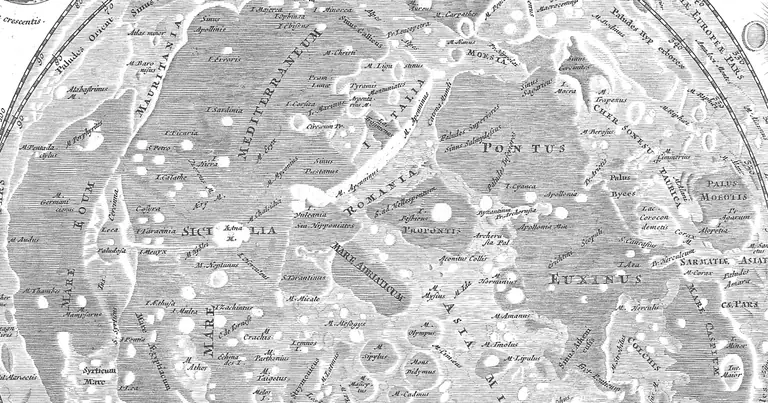
A full moon is the Moon at its brightest, a complete lit disc that rises as the Sun goes down. It stands directly across the sky from the Sun, and tradition reads that face-off as the peak of the lunar month, when whatever has been building finally shows itself.
Sun and Moon 180° apart: the opposition behind the glow
At the full moon the Sun and Moon sit opposite each other, 180 degrees apart, an opposition across the zodiac. With the Sun behind us lighting the Moon head-on, we see the whole of its near side, so it rises around sunset and sets around sunrise. If a full moon falls near a lunar node, the Earth's shadow crosses the Moon and the full moon becomes a lunar eclipse. A total lunar eclipse turns the Moon a dim copper red, which is where the nickname blood moon comes from, since only sunlight bent through our atmosphere reaches it.
Culmination, release and the folk names
Tradition reads the full moon as culmination and release. It is the harvest point of the cycle, when results ripen, feelings run high and things kept hidden come into the open. Farming almanacs gave each month's full moon a folk name, so February's is often called the snow moon, and those names still circulate today. The sign the full moon lands in colors what comes to a head.
A snow moon in Leo, then a blood moon in Virgo
The full moon of 1 February 2026 fell in Leo, the one North American almanacs call the snow moon. A month later the full moon on 3 March 2026 in Virgo sat at a node and became a total lunar eclipse, a blood moon, read in the tradition as an amplified and fated turning point rather than an ordinary culmination.
Supermoon, blood moon and the instant of full
A supermoon is about distance, not phase; it is just a full moon that happens near the Moon's closest approach to Earth. A blood moon is not a separate event but the look of a total lunar eclipse. And the Moon is only exactly full for an instant, not the whole night, even though it looks full for a day on either side.
Every 2026 date, time and traditional name
The NovaOracles lunar calendar gives each full moon's date and sign, the moon and eclipses guide explains the pattern, and why eclipses matter covers the ones that turn into a lunar eclipse. Every 2026 date, with US Eastern and UTC times and the traditional names, is in the full moon 2026 calendar.
FAQ
Frequently asked questions
What is a full moon?
The phase where the Moon stands opposite the Sun and its whole near side is lit. It rises around sunset and sets around sunrise, and tradition reads it as the peak of the lunar month.
What is the snow moon in 2026?
The February full moon, which fell on 1 February 2026 in Leo. Snow moon is a folk name from North American almanacs, one of the traditional monthly full moon names.
When is the blood moon in 2026?
A blood moon is a total lunar eclipse. In 2026 the total lunar eclipse fell on 3 March in Virgo, when the Moon slid into Earth's shadow and reddened.
Sources
Try it
Open the free toolRelated terms
The Journal
Why eclipses matter in a birth chartRead the guide
Moon phases and eclipsesSee how this shows up in your own chart.
Find it in my chart