The sky
Waxing Gibbous Moon: What It Is, When You See It and What It Means
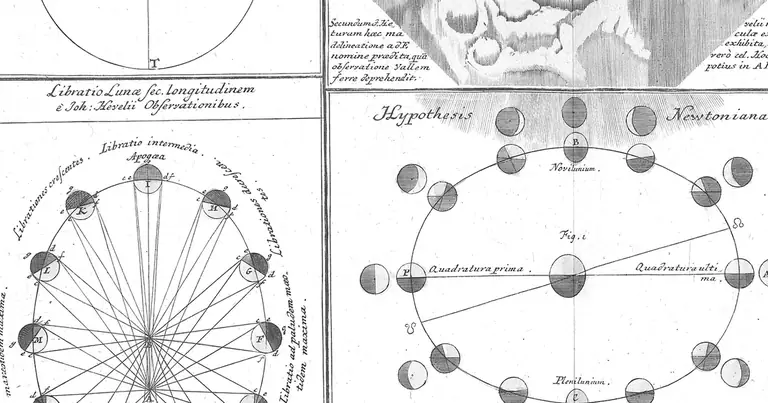
The waxing gibbous moon is the phase when more than half of the Moon's disk is lit and the lit part is still growing toward the full moon. It begins at first quarter, roughly 7.4 days after the new moon, and ends at the full moon about a week later. From the US it is lit on the right side with a dark bulge on the left. It rises in the afternoon, is high in the sky at dusk and stays up for most of the night. Below are the shape, how to tell it from the waning gibbous, the full moons that close the next phases by our calculation, and how astrology reads it.
What the waxing gibbous moon is
The Moon takes about 29.5 days to complete a cycle, and a waxing gibbous covers the stretch between first quarter, when exactly half of the disk is lit, and the full moon. "Gibbous" comes from a Latin word for hump. The lit part is wider than a half circle, and the line between light and shadow bulges out into the dark side.
The phase begins at 50% lit and the lit part grows each night, reaching nearly 100% the night before the full moon. In its last day or two a waxing gibbous looks almost like a full moon, and only a narrow dark edge on the left tells them apart. The moon phase entry and our phases of the Moon guide show where the phase sits among the other seven.
When and where to see it
A waxing gibbous is an afternoon and evening Moon. It rises in the afternoon, before the Sun sets, so you can often spot it in the daytime sky as a pale shape in the east. By sunset it has climbed into the southeast, and it stands highest in the south between early evening and midnight. It sets after midnight, a little later each night as the phase nears full.
That makes it one of the easiest phases to watch: a clear evening is enough, with no early start or late night. Its brightness also washes out the fainter stars, so the sky looks different from the week of a crescent.
Waxing gibbous vs waning gibbous
The two gibbous phases sit on either side of the full moon. From the Northern Hemisphere a waxing gibbous is lit on the right and a waning gibbous on the left, and in the Southern Hemisphere the sides swap. The waxing one gets fuller each night, and the waning one shrinks.
The clock is the easier check. A gibbous Moon already up in the afternoon or early evening is waxing. A waning gibbous rises after sunset, later each night, and is still in the sky after sunrise, so a gibbous Moon that you first see rising late at night, or still shining in the morning, is waning.
The next waxing gibbous moons
A waxing gibbous always ends at a full moon, so the full moon times mark its end. By our calculation the new moon on October 10, 2026 fell at 15:50 UTC, so as of October 11 the Moon is a waxing crescent, and the waxing gibbous phase starts about a week after that new moon, around October 17 or 18. The next full moons close it:
| Full moon | UTC | New York time |
|---|---|---|
| October 26, 2026 | 04:12 | 12:12 a.m. EDT |
| November 24, 2026 | 14:54 | 9:54 a.m. EST |
| December 24, 2026 | 01:28 | 8:28 p.m. EST on December 23 |
| January 22, 2027 | 12:17 | 7:17 a.m. EST |
Each waxing gibbous covers roughly the week before the time shown. The exact day it starts depends on first quarter, which our tables do not list. The lunar calendar gives that day and moonrise and moonset for your city. The full list of 2026 and 2027 full moons is in the full moon 2026 and full moon 2027 guides.
Before and after in the cycle
The waxing crescent moon comes before it, with less than half of the disk lit. After the full moon the lit part starts to shrink and the Moon enters the waning gibbous, which later thins to the waning crescent moon. A lunar eclipse can happen only at the full moon that ends a waxing gibbous, when the Moon is close to a lunar node, and our lunar eclipse guide lists the dates.
What the waxing gibbous means in astrology
Astrology treats the waxing gibbous as the last stretch of effort before a culmination. The new moon starts something and the crescent is the first push. By the gibbous phase tradition sees the work as mostly in place, and what remains is refinement: checking details, adjusting the plan and preparing for the moment the full moon makes things visible. In Dane Rudhyar's eight-phase lunation cycle this is the gibbous phase, a time of analysis and improvement.
For daily life that suggests a use for the week: finish what you began at the new moon, fix what the last days showed you, and hold off judging the result until the full moon. Treat it as a symbolic reading and not a measurement, because the Moon's light does not act on your plans. If you want to add the zodiac layer, the moon sign tool shows which sign the Moon is in on any date.
FAQ
Frequently asked questions
- How much of the Moon is lit in a waxing gibbous?
- More than half and less than all of the disk, from 50% at first quarter to just under 100% the night before the full moon. The unlit part is a shrinking bulge on the left side, seen from the Northern Hemisphere.
- How many days after the new moon is a waxing gibbous?
- Roughly 7.4 to 14.8 days after the new moon, so it fills about the second week of the lunar cycle, between first quarter and the full moon.
- What is the difference between waxing gibbous and waning gibbous?
- Waxing gibbous is lit on the right from the Northern Hemisphere, grows toward full and is up in the evening. Waning gibbous is lit on the left, shrinks after full and rises late in the evening, staying up after sunrise.
- What time does the waxing gibbous moon rise?
- In the afternoon, between about midday and sunset, and it stays up for most of the night. Each day it rises about 50 minutes later, and it sets after midnight, later each night as the full moon nears.
Sources
Terms in this piece
Have your own sky read to you every morning
NovaOracles membership reads each day's sky against your exact birth chart and writes you a short reading every morning, with your transits, your bonds and your year ahead.
Membership includes
- A personal reading every morning
- Your full natal chart, computed from real astronomy
- The live sky and your transits, in real time
- Bonds: the sky between you and the people you love
Membership from €4.99 a week, or try monthly or annual free for 3 days. Cancel anytime.