The moving sky
Transit
A transit is a planet's current position in the sky and the aspect it makes to a point in your natal chart. Transits are how the living sky touches your fixed birth chart day to day, marking the times a current planet lines up with something you were born with. Because planets can turn retrograde, a slow transit often passes a natal point three times, an opening, a review, and a resolution.
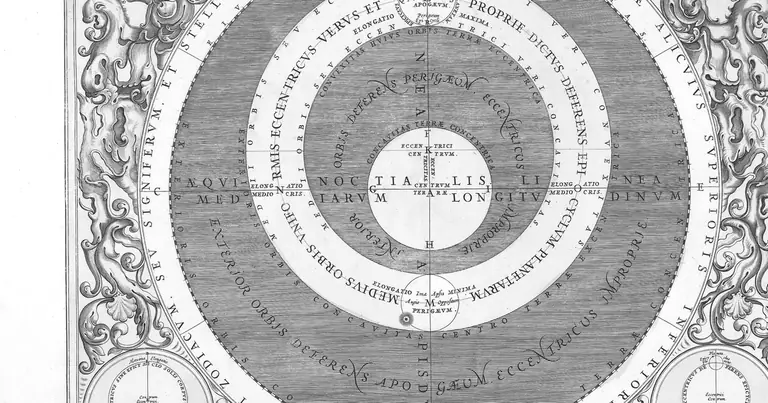
A transit is the sky catching up with your chart. Your natal placements never move, but the real planets keep orbiting, and when one of them reaches an angle to a natal point, that is a transit. It is the main way astrologers read timing, the bridge between a fixed birth chart and an ordinary Tuesday.
How long each planet stays in a sign
Every planet transits at its own speed, which decides how long its themes last. The Moon crosses a sign in about two and a half days, so its transits are fleeting. The Sun takes a month, Mars around six or seven weeks in a sign, Jupiter about a year, and Saturn roughly two and a half years. The far planets crawl: Uranus, Neptune and Pluto can spend years at a stretch touching one part of your chart. That is why a Moon transit reads as a passing mood and a Pluto transit as a chapter of life.
One planet waking up another
Tradition reads a transit as one planet waking up another. A transiting planet forms an aspect to a natal placement and is said to activate it for a while. Fast transits color the day; slow ones from the outer planets mark the big turning points. The hard angles, the conjunction, square and opposition, tend to draw the most attention, since they ask for something to change.
The Saturn return and Jupiter's move into Leo
Around the ages of twenty-nine and thirty, transiting Saturn returns to the exact degree it held when you were born. This Saturn return is read as a rite of passage, a stretch where commitments get tested and you step fully into adult responsibility. In 2026, on a wider scale, Jupiter moved from Cancer into Leo, a transit that lights up whatever sits in early Leo across many charts.
Transit, birth chart and the newspaper horoscope
A transit is not part of your birth chart; it is the living sky laid over it. It also differs from a progression, which is a symbolic technique rather than a real planet moving. And a newspaper horoscope is only the crudest kind of transit reading, generalized to a whole sun sign.
Reading transits against your own placements
The NovaOracles Mercury retrograde tracker follows one fast planet's transits closely, and the transits guide with how a transit touches your chart shows how to read them against your own placements.
FAQ
Frequently asked questions
What is a transit in astrology?
The position of a planet in the sky right now and the aspect it makes to a placement in your natal chart. Transits are how the moving sky times themes and events against your fixed chart.
What is a Saturn return?
The transit when Saturn comes back to the exact place it held at your birth, around ages twenty-nine to thirty. It is traditionally read as a threshold into full adulthood.
How are transits different from your natal chart?
Your natal chart is frozen at birth and never changes. A transit is a real planet moving today, laid over that fixed chart to show what is being stirred right now.
Sources
Try it
Open the free toolRelated terms
The Journal
How a transit touches your chartRead the guide
TransitsSee how this shows up in your own chart.
Find it in my chart