No. 02 · Technique
How a transit actually touches your chart
NovaOracles · August 21, 2026
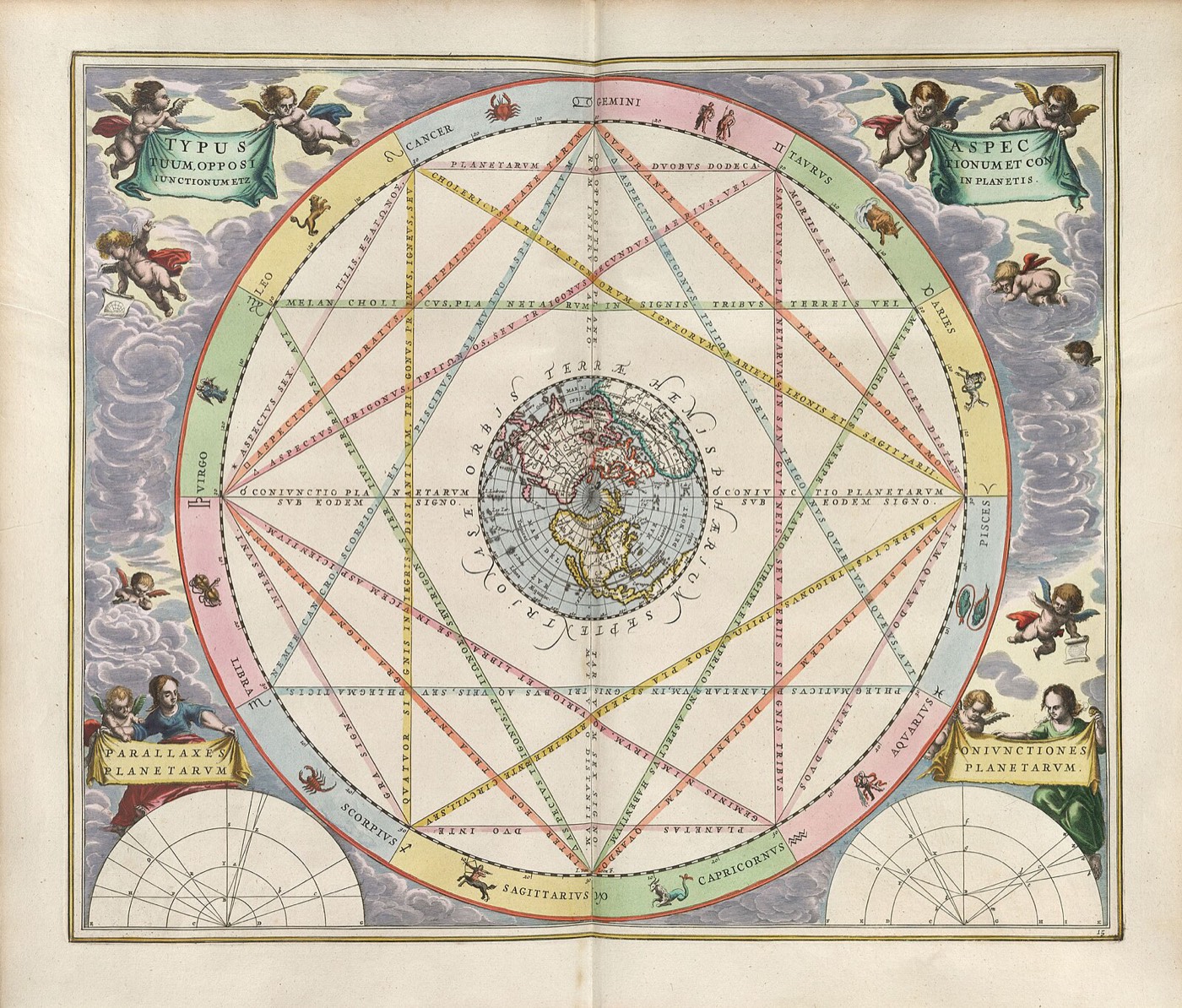
A transit is not a mood in the air. It is a moving planet forming an exact angle to a point in your natal chart, and the angle decides the tone: a trine eases, a square pushes, a conjunction turns the volume up. Here is how to follow one from first contact to the last degree.
A moving sky over a fixed map
Your natal chart is a photograph: the sky frozen at the minute you were born. The planets themselves never stopped. A transit is what happens when a planet moving through the sky today reaches an exact angle to a point in that frozen photograph. The moving planet supplies the theme, the natal point names what part of your life it touches, and the angle sets the tone.
The classical angles are few and specific. A conjunction, zero degrees apart, merges the two voices. A trine, one hundred twenty degrees, lets them cooperate. A square, ninety degrees, forces a decision. An opposition, one hundred eighty, stages a standoff. Astrologers allow a small orb of a few degrees around exactness, which is why a transit is a window of days or weeks, not a single afternoon.
Fast planets, slow planets
Speed decides weight. The Moon transits your whole chart every month, so its contacts are background weather, gone by dinner. Mercury, Venus and the Sun move in days and color a week. Mars stays long enough to start something. The slow planets are the ones people write memoirs about: Jupiter takes a year per sign, Saturn two and a half, and Uranus, Neptune and Pluto sit on a single degree for months.
Slow transits also retrograde, which means a planet often crosses the same natal point three times: once moving forward, once backing up, once forward again. That is why a big transit tends to feel like a story in three acts, first the opening event, then the reconsideration, then the resolution. Knowing the timetable turns a confusing year into a legible one.
What a transit feels like from inside
A transit does not make things happen to you so much as it changes the pressure in one room of your life. Saturn square your natal Venus does not cancel love; it asks whether your commitments are real, and it makes vague arrangements uncomfortable until they are clarified. Jupiter on your Midheaven does not hand you a promotion; it opens the door and leaves the walking to you.
This is why the same transit lands so differently for different people. The angle and the timing are identical, but the natal chart underneath is not. Reading a transit well always means reading it against your own chart, house by house, not against a generic forecast written for one twelfth of humanity.
The Saturn return, a worked example
Around age twenty nine, Saturn completes its first full lap and returns to the exact degree it held at your birth. This is the most famous transit there is, the Saturn return, and it behaves exactly like the theory says: a slow planet, a triple pass, a season of roughly a year in which the structures of your life are audited. Careers change, relationships formalize or end, and the question underneath is always the same: is this actually yours?
Handled honestly, a Saturn return is less a crisis than a graduation. The same is true of transits in general. They are not verdicts arriving from the sky, they are timers, and the useful move is to know which one is running. A computed transit calendar, matched to your own natal chart, is exactly that.
Read your own sky, not a generic one.
NovaOracles computes your full natal chart from real astronomy: your rising sign, your big three, every house and every aspect, personal to the minute you were born.
Get your full chart