No. 03 · Basics
Sun, Moon and rising: who does what
NovaOracles ·
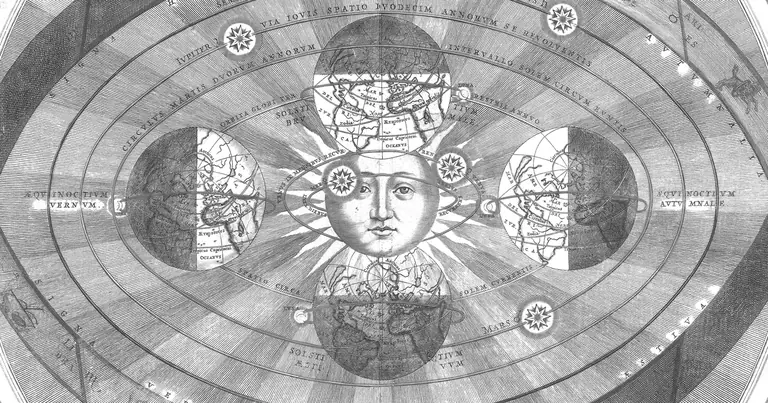
Ask three questions of a chart and you get its pillars. The Sun says what you are here to become, the Moon says what you need to feel safe, and the rising sign says how you step into a room. Read together, your Sun, Moon and rising sign explain why no one is ever just their sign.
The Sun: the story you are writing
The Sun sign is the one everyone knows, and it earns its fame. It marks where the Sun stood along the zodiac on your birthday, and in a chart it describes the central project of a life: what you are trying to become, where your vitality gathers, which kind of effort leaves you more alive rather than less. It is less a personality than a direction of travel.
This is also why Sun sign columns feel half right at best. The Sun is one voice out of many, and it speaks about purpose, not about feelings or first impressions. A chart with the Sun in Capricorn can still cry at commercials and flirt like a Gemini, depending on what the other two pillars are doing.
§ 01
The Moon: the inner weather
§ 01
The Moon: the inner weather
The Moon moves fast, changing signs every two to two and a half days, and it governs the fast-moving part of you: moods, needs, instincts, the things you reach for when no one is watching. Your Moon sign describes what safety feels like, how you process emotion, and what you are like at two in the morning rather than two in the afternoon.
Because the Moon is private, it is the pillar people recognize last and feel most. Someone with a steady Taurus Sun and a Scorpio Moon runs deeper currents than their calendar suggests. If your Sun sign never quite fit, the Moon is usually the missing chapter, and finding it requires your birth date and, on some days, your birth time as well.
§ 02
The rising sign: the door you open
§ 02
The rising sign: the door you open
The rising sign, or ascendant, is the sign that was climbing the eastern horizon at the minute you were born. It changes every two hours, which makes it the most individual of the three, and it describes the meeting point between you and the world: your manner, your style of arrival, the first read people get before they know anything true about you.
The ascendant is also structural. It sets where your houses begin, so it decides which areas of life your planets actually operate in. Two charts with identical Sun and Moon but different rising signs are two different lives, which a rising sign calculator can only place with your exact birth time. This is why the big three, not the Sun alone, is the honest minimum for describing anyone.
§ 03
Reading your Sun, Moon and rising as one chord
§ 03
Reading your Sun, Moon and rising as one chord
The useful way to hold the big three is as one chord rather than three notes. The Sun is the direction, the Moon is the fuel, the rising sign is the vehicle. A Pisces Sun with a Virgo Moon and Leo rising is a dreamer who worries in private and arrives in color. Read together, contradictions stop being flaws and start being structure.
Finding your own big three takes a birth date, a birth place, and a birth time. NovaOracles computes all three from real astronomy and then keeps going, into houses, aspects and transits, because the big three is the doorway into a chart.
§ 04
Why your big three can seem to contradict each other
§ 04
Why your big three can seem to contradict each other
It is common to read your Sun, Moon and rising and feel like they describe three different people. That is not a flaw in the chart; the three come from three different clocks. The Sun moves about a degree a day and marks your long project. The Moon changes sign every two to two and a half days and holds your private, feeling life. The ascendant turns over every two hours and sets the face you show first.
So a chart can be ambitious in daylight and tender at midnight and brisk at the front door, all at once, because each pillar is answering a different question. Read as a contradiction, the big three looks incoherent. Read as a chord, three notes sounding together, it starts to explain the ordinary experience of being more complicated than any one label. Most people are not their Sun sign failing to fit; they are three signs at work.
There is also a plain reason the Sun gets all the attention: it is the only pillar you can find without a birth time. The Moon needs the date and often the time, the ascendant needs the exact minute and place, so the two pillars that make a chart feel personal are also the two a birthday alone cannot give you. The famous vagueness of Sun-sign columns is partly this, that they are written for the one pillar everybody already knows.
§ 05
How to find your big three
§ 05
How to find your big three
You need three facts, and the third is the one people forget. Your date of birth places the Sun, and on most days the Moon. Your place of birth and, above all, your exact time of birth place the ascendant and pin the Moon down on the days it is changing sign. Without the time you can still know your Sun, usually your Moon, and your elements, but the rising sign stays open.
Any honest chart calculator, like the free Big Three calculator, will ask for all three and compute the rest from real astronomy rather than a table. NovaOracles does this to the degree, then keeps going into houses, chart ruler and aspects, because the big three is only the doorway into a chart. If your birth time is unknown, it is better to leave the ascendant blank than to guess it, and a good tool will let you do exactly that.
It helps to gather the birth details before you start: the date, the place at least as precisely as a town, and the time to the minute from a birth certificate if you can find it. With those three in hand the computation is instant and exact. Missing the time is common and not fatal; it means the reading is honest about leaving the rising sign and the houses open rather than inventing them.
§ 06
When your Sun, Moon and rising share a sign
§ 06
When your Sun, Moon and rising share a sign
Now and then all three pillars land in the same sign, and the astronomy behind it is simple. The ascendant sits near the Sun's degree when you are born around sunrise, because that is the moment the Sun itself is climbing the eastern horizon. The Moon sits near the Sun near a new moon, when the two line up in the sky. So a birth around dawn on a new-moon day can carry Sun, Moon and rising all in one sign.
Such a chart tends to read as unusually concentrated, its energy pooled in a single sign rather than spread across three. It is not better or stronger, only more single-minded, and the rest of the chart, the other planets and the houses, still does its usual work of adding shading. The opposite case, three pillars in three very different signs, spreads the same story across more of the sky.
§ 07
Beyond the big three: the rest of the chart
§ 07
Beyond the big three: the rest of the chart
The big three is the honest minimum. Two more personal planets fill in the sketch quickly. Mercury, never more than about twenty-eight degrees from the Sun, colors how you think and speak, and always sits in your Sun sign or one right beside it. Venus, never more than about forty-seven degrees away, colors what you value and how you relate, and stays within two signs of your Sun. Add Mars, for drive, and some readers call the set the big six.
From there the chart opens into the slow planets, the twelve houses that say where each energy plays out, and the aspects that tie the whole thing together. This is why a Sun-sign column can only ever be half right: it is reading one voice out of ten, and none of the geometry between them. The big three gives you a person in outline; the full chart gives you the shading, and that is where a reading stops sounding generic.
§ 08
Do the big three matter in a relationship?
§ 08
Do the big three matter in a relationship?
People often ask whether two big threes are compatible, and the honest answer is that they are a good start and not the whole test. Sun, Moon and rising contacts between two charts do carry weight: shared or harmonious lights can feel like ease, while friction between them can feel like effort. But a relationship lives in the full comparison of two charts, not three points each.
Reading two whole charts against each other is called synastry, and it looks at how one person's planets meet the other's across the board. A harmony score can summarize the pattern, but the relationship stays the work of the two people in it. If you want to see it computed, NovaOracles' free Compatibility tool reads both charts from real astronomy, big three included.
The same caution applies to matching big threes from a table. Two people can share a sunny set of signs and still meet as strangers, or clash on paper and fit easily in person, because the contacts that matter run between whole charts. The big three is a fair first impression of a pairing, and like any first impression it is worth checking against the fuller picture.
FAQ
Frequently asked questions
What is the big three in astrology?
Your big three are your Sun sign, Moon sign and rising sign. The Sun describes your core direction, the Moon your inner emotional life, and the rising sign the manner in which you first show yourself to the world. Together they give a fuller picture than the Sun sign alone.
What is the difference between sun, moon and rising signs?
The Sun sign is set by your birth date and marks your long-term direction. The Moon sign changes about every two to two and a half days and holds your feelings and needs. The rising sign changes about every two hours and needs your exact birth time and place.
Why do my sun, moon and rising signs feel contradictory?
Because each answers a different question and moves on a different clock. A chart can be ambitious by day, tender at night and brisk on first meeting all at once. Astrologers read the three as one chord rather than a single label.
How do you find your big three?
You need your birth date, birth place and exact birth time. The date places the Sun and usually the Moon, and the time and place fix the rising sign and pin down the Moon on the days it changes sign. A chart calculator computes all three from astronomy.
Do the big three matter for compatibility?
They are a fair first impression of a pairing but not the whole test. A full reading, called synastry, compares two entire charts rather than three points each, which is why matching big threes from a table can mislead.
Sources
Terms in this piece
Read the guide
The big threeHave your own sky read to you every morning
Membership gives you a short reading each morning based on today's sky and your birth chart, plus your transits, your relationships and your year.
Membership includes
- A personal reading every morning
- Your full natal chart, computed from real astronomy
- The live sky and your transits, in real time
- Bonds: the sky between you and the people you love
Membership from €3.99 a week. Cancel anytime.
Read next
Why eclipses matter in a birth chart