The sky
Mercury Retrograde Meaning, and How to Survive 2026
NovaOracles, by OZGN Studio · September 18, 2026
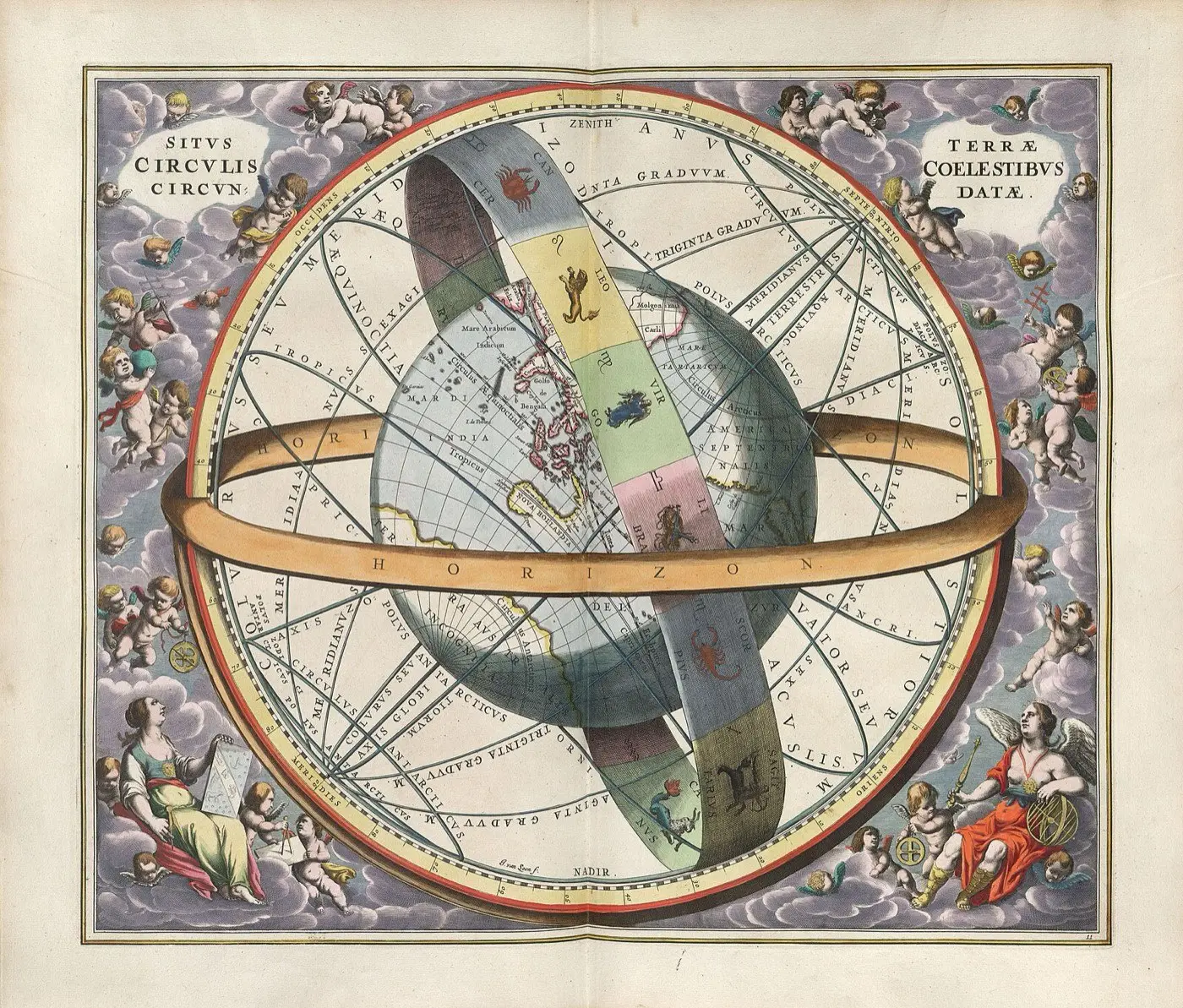
Mercury retrograde meaning starts with one plain fact that takes most of the fear out of it: nothing is actually moving backward. Mercury keeps orbiting the Sun in the same direction it always has. What changes is our view of it. For about three weeks, three or four times a year, Mercury appears from Earth to slide backward through the zodiac, and astrology has spent a very long time reading that apparent reversal as a season for slowing down and checking your work. The reputation is louder than the reality, and the reality is easier to live with once you know what it is.
The planet itself is astrology's messenger, tied to talk, writing, travel, trade and the small print of daily life. When it turns retrograde, the tradition reads all of that as briefly running in reverse: messages cross wires, plans need re-plotting, old business comes back around. Treated sensibly it is less a curse than a scheduled prompt to review rather than rush. This piece walks through what the motion really is and how to move through a retrograde without either dread or drama.
Mercury retrograde meaning, in plain terms
The backward motion is an illusion of perspective, the same one you see when a faster car passes a slower one on the motorway and the slower car seems to drift backward for a moment. Earth and Mercury both circle the Sun, Mercury faster and on a tighter track. Several times a year Earth catches and overtakes it along our shared line of sight, and during that overtaking Mercury appears to stop, reverse against the background stars, then stop again and resume its forward path. Astronomers call this apparent retrograde motion, and it happens to every planet, not just Mercury.
What makes Mercury special is only how often it happens. Because Mercury is the innermost and fastest planet, Earth laps it more frequently than any other body, so Mercury retrogrades three or usually three, sometimes four, times every year. Each episode runs about three weeks from the day it appears to stop to the day it appears to start again. Those two turning points are the moments astrologers watch most closely, and they have a name of their own.
Stations, and how a retrograde begins and ends
A retrograde does not switch on like a light. Mercury appears to slow down, come to a near halt, and hang almost motionless for a day or two before it reverses. That pause is called a station, and there are two of them: the station retrograde, when the planet stops and turns backward, and the station direct, when it stops again and turns forward. The days around a station are when the effect is read as strongest, because the planet is dwelling on a single degree of the zodiac rather than hurrying through.
Astrologers pay attention to which sign Mercury stations in, because that colors the flavor of the whole retrograde. Mercury is at home in Gemini and Virgo, the signs it rules, and a retrograde there is read a little differently from one in a water or fire sign. The point for a reader is that a retrograde has a shape: a slow entrance, a three-week middle, and a slow exit, rather than a wall you hit and a wall you pass.
The shadow period
There is a subtler part that trips people up, the shadow, sometimes called the retroshade. Because Mercury reverses over a stretch of zodiac and then re-covers the same ground going forward, it passes over the same degrees three times in all. The pre-shadow begins when Mercury, still moving forward, first reaches the degree it will later back up to. The post-shadow ends weeks after the direct station, when Mercury finally re-passes the degree where it first turned back. Only between the stations is it truly retrograde, but the shadow weeks on either side are read as the wind-up and the wind-down.
You do not have to track any of this by hand. The Mercury retrograde tracker computes the stations and the shadow windows from real astronomy and shows whether Mercury is retrograde right now, so you can see the full shape of a period, entrance and exit included, instead of guessing from a headline. Knowing the shadow is there also explains why the tangled feeling often starts before the official dates and lingers a little after.
What the tradition says to avoid
The folklore around Mercury retrograde is mostly common sense wearing a costume. Since Mercury governs communication and detail, the tradition advises care with anything that leans on those: read a contract twice before signing, save your work and back up your files, confirm travel times, and reread an angry message before you send it. Big purchases that are hard to undo, especially electronics and vehicles, are the classic thing people prefer to postpone. None of this is a rule handed down from the sky. It is a nudge to build in a margin for error during weeks the tradition marks as error-prone.
It helps to keep the claim modest. Astrology presents Mercury retrograde as a symbolic weather pattern, not a proven force that reaches out and breaks your laptop. Read that way it becomes useful rather than frightening: a recurring reminder to double-check the things you would rather not have to fix later. If a retrograde genuinely rattles a plan, that is worth noticing, and just as often the three weeks pass without incident.
How to actually use it
The kinder reading of a retrograde is not about what to avoid but what it is good for, and the clue is in the prefix. This is a season for the re- words: review, revise, repair, revisit, reconnect. Projects you shelved ask to be picked up. People from earlier chapters resurface. Work that needs a careful second pass, editing, tidying, sorting out a mess you have been ignoring, tends to go well now precisely because the mood is backward-looking. The tradition treats a retrograde as time reclaimed for finishing rather than starting.
That framing turns three awkward weeks into three useful ones. Instead of forcing a launch through a headwind, you can schedule the launch for after the direct station and spend the retrograde getting everything ready for it. Read against your own chart the effect gets more specific, because a retrograde matters most where it falls among your houses and planets. That is really a question about transits, and how a transit touches your chart explains the general idea, while the transits guide goes wider into how a moving planet lands on a natal one.
The direct station is the natural green light. Astrologers often wait for that day, when Mercury turns forward again, before launching anything that had to sit through the three weeks, treating the turn as the moment the road reopens rather than counting on a precise hour.
Mercury retrograde in 2026
Mercury turns retrograde three times in 2026, each period running about three weeks with a shadow on either side. The dates below are computed from the site's own astronomy engine, the same source behind the tracker, and use America/New York (US Eastern).
| Mercury retrograde 2026 (US Eastern) | Sign | Full shadow span |
|---|---|---|
| Feb 26 to Mar 20 | Pisces | Feb 11 to Apr 9 |
| Jun 29 to Jul 23 | Cancer | Jun 12 to Aug 6 |
| Oct 24 to Nov 13 | Scorpio | Oct 4 to Nov 30 |
The sign colors the flavor of each stretch: the late-winter retrograde reviews Piscean matters of imagination and boundaries, the summer one turns to Cancerian home and family, and the autumn one to Scorpio's themes of trust and shared resources. For your own time zone, the exact minute of each station, and a live check of whether Mercury is retrograde right now, the Mercury retrograde tracker works it out from the planet's real position and carries the same method into 2027. Mercury is only the most frequent of the year's backward turns; every retrograde planet in 2026 lines the rest up beside it, Venus through Pluto.
Read the year with a light hand. Mark the retrograde weeks on your calendar so a launch or a big signing can dodge them if it easily can, and otherwise carry on, a little more careful with words and details than usual. A transit like this one is a rhythm, not an ambush, and the whole point of knowing it is coming is that it stops being a surprise. Treated as a recurring prompt to slow down and finish things, Mercury retrograde is one of the easiest patterns in the sky to live with well.
FAQ
Frequently asked questions
- What does mercury retrograde mean?
- It means Mercury appears to move backward through the zodiac for a few weeks, an optical effect of Earth and Mercury travelling their orbits at different speeds. Astrologers read the planet of messages, travel and small print as briefly working in reverse, a time to review and double-check rather than launch.
- What should you not do during mercury retrograde?
- The traditional advice is to avoid rushing anything that depends on clear communication or exact detail: signing major contracts, buying costly electronics, or firing off a message in anger. None of it is forbidden. The tradition simply suggests reading the fine print twice and leaving room for delays.
- When does mercury retrograde end?
- Each retrograde lasts about three weeks and ends at the direct station, the day Mercury appears to stop and turn forward again. In 2026 the three retrogrades end on March 20, July 23 and November 13, in US Eastern time; a tracker set to your own time zone gives the exact hour.
- How many times a year does Mercury go retrograde?
- Usually three times, occasionally four. Mercury is the fastest planet, so it laps the Sun from our point of view more often than any other, which is why its retrogrades come around several times a year while the outer planets manage only one.
Sources
Terms in this piece
Read your own sky, not a generic one.
NovaOracles computes your full natal chart from real astronomy: your rising sign, your big three, every house and every aspect, personal to the minute you were born.
Get your full chart