The sky
Saturn Retrograde 2026, and Every Retrograde Planet
NovaOracles, by OZGN Studio · September 18, 2026
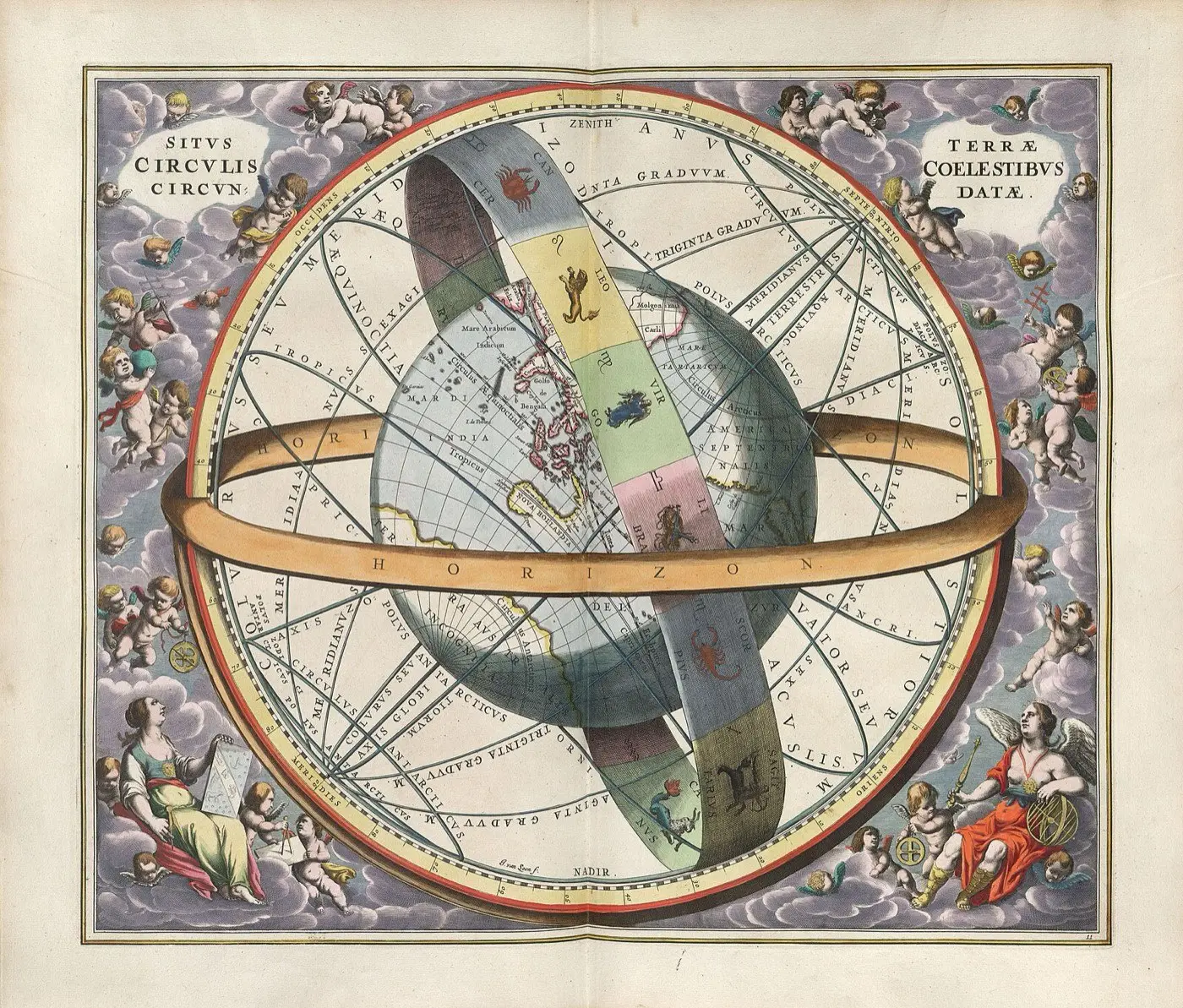
Saturn retrograde 2026 is the phrase most people search for, but it is only one of the year's many backward turns. Every planet appears to reverse through the zodiac from time to time, and 2026 is no exception: the slow outer planets each take their annual turn, Mercury takes several, and the two in between keep to their own longer rhythms. None of it is a warning. A retrograde is a trick of perspective with a long symbolic tradition attached, and reading the whole year's worth at once makes the pattern far less mysterious than any single scary headline suggests.
The mechanism is the same for all of them. A planet only seems to move backward because Earth and that planet travel their orbits at different speeds, so as our line of sight sweeps past, the planet appears to slow, stop, drift in reverse, then resume. The full explanation, stations and shadow periods included, is laid out in the piece on how to survive Mercury retrograde; here the aim is to take the whole roster planet by planet, so you know who is backward, for how long, and what the tradition reads into each.
Saturn retrograde 2026 and the outer planets
Start with the slow movers, because they behave the most predictably. Every planet from Jupiter outward, that is Jupiter, Saturn, Uranus, Neptune and Pluto, turns retrograde once in every year and stays that way for months at a stretch. It is a feature of how their orbits sit against ours: each spends a long span of every year in apparent reverse. So Saturn is retrograde for part of 2026, as it is for part of every year, and so are the four others, no unusual alignment required. In 2026 Saturn's own retrograde runs from July 26 to December 10, all of it in Aries.
The durations run long. Jupiter tends to hold its retrograde for about four months, Saturn for roughly four and a half, and Uranus, Neptune and Pluto for five months or more each. Because these planets are so slow and so far off, their retrogrades are read as quieter and more internal than Mercury's, a background review of the big, slow themes each one governs rather than a scramble of missed texts. Saturn retrograde is read as a season to revisit your structures and commitments; the outer three, moving barely at all, mark long stretches of inner recalibration more than day-to-day disruption.
The inner planets: Mercury, Venus and Mars
The closer planets keep faster, less tidy schedules. Mercury is the busy one, turning retrograde three or usually three, sometimes four, times a year, about three weeks each time. That is the retrograde most people notice, and 2026 will bring its usual handful. Because Mercury governs messages, travel and the small print, its retrogrades are read as the classic time to double-check and slow down, and the Mercury retrograde tracker computes each 2026 window and its shadow from the real motion of the planet.
Venus and Mars run on longer clocks. Venus turns retrograde only about once every nineteen months, for roughly six weeks, and it is read as a review of love, money and what you value. Mars is slower still, turning back only about every other year, for something like two to two and a half months, and it is read as a check on drive, effort and anger. Because their cycles are so much longer than a year, whether Venus or Mars actually retrogrades depends on where each one happens to be. In 2026 Venus does turn back, from October 3 to November 13, sliding from Scorpio into Libra, while Mars has no station at all and stays direct the whole year.
Every 2026 retrograde, planet by planet
All dates below come from the site's own astronomy engine, the same source behind the tracker, and use America/New York (US Eastern). A window that opens in 2025 or closes in 2027 is marked as such.
| Planet | 2026 retrograde window (US Eastern) | Sign |
|---|---|---|
| Mercury | Feb 26 to Mar 20 | Pisces |
| Mercury | Jun 29 to Jul 23 | Cancer |
| Mercury | Oct 24 to Nov 13 | Scorpio |
| Venus | Oct 3 to Nov 13 | Scorpio into Libra |
| Mars | no retrograde in 2026 | none |
| Jupiter | into the year to Mar 10, then from Dec 12 | Cancer, then Leo |
| Saturn | Jul 26 to Dec 10 | Aries |
| Uranus | into the year to Feb 3, then from Sep 10 | Taurus, then Gemini |
| Neptune | Jul 7 to Dec 12 | Aries |
| Pluto | May 6 to Oct 15 | Aquarius |
Two of the outer planets bridge the year. Jupiter begins 2026 still retrograde from a station the previous November, turns direct on March 10, and does not reverse again until December 12, when it starts the retrograde it carries into 2027. Uranus keeps its own version of the same pattern, ending a winter retrograde on February 3 and turning back on September 10. Mars is the odd one out, with no station in 2026, so it never turns retrograde this year.
What each retrograde is read to mean
Every planet governs a department of life, and its retrograde is read as a review of that department. Mercury covers communication, so its retrograde is the time for rereading and re-sending. Venus covers affection, beauty and money, so a Venus retrograde is read as old loves resurfacing and spending habits coming up for review. Mars covers action and desire, so its retrograde is read as a pause on pushing forward, better spent regrouping than charging.
The outer planets carry heavier, slower themes. Jupiter governs growth, belief and opportunity, and its retrograde is read as a turn inward to reconsider what you are reaching for. Saturn governs structure, duty and time, so Saturn retrograde is read as a reckoning with the commitments and boundaries you have built. Uranus, Neptune and Pluto move so slowly that their retrogrades color long seasons rather than single weeks: Uranus with change and independence, Neptune with dreams and illusions, Pluto with power and deep transformation. None of these is a forecast of events, only the tradition's vocabulary for the mood each planet lends while it appears to move in reverse.
Are retrograde planets bad?
The short answer is no, and it is worth saying plainly, because the word retrograde has picked up a dread it does not earn. A retrograde is a scheduled, entirely normal appearance caused by geometry. At any given moment several planets are usually retrograde at once, and life goes on as it always does. If retrogrades were disasters, there would be almost no calm days in a year, since the outer planets alone keep two or three of them backward for months on end.
The useful frame is the review, not the ruin. A station, the day a planet appears to stop before reversing, is read as a moment to pause and take stock of that planet's affairs, and the retrograde that follows is a stretch for revisiting rather than launching. Read that way, a chart full of retrogrades is not a warning but a to-do list of things worth a second look. What a retrograde means for you personally depends on where it lands among your own houses and planets, which is the subject of the transits guide.
Retrograde planets in your own chart
There is a second way a retrograde touches you, and it has nothing to do with 2026. If a planet was retrograde at the moment you were born, it sits in your birth chart as a natal retrograde, marked on a chart wheel with a small letter r beside the planet. This is far more common than it sounds. Because the outer planets are retrograde for months of every year, most people are born with at least a couple of retrograde planets in their charts, and a chart with three or four is nothing unusual.
The tradition reads a natal retrograde as that planet's function turned inward. A retrograde Mercury is read as a mind that runs its own way before it speaks, chewing an idea over privately rather than out loud. A retrograde Mars is read as drive that banks its fire and acts on a delay. None of it is a flaw, only a more reflective, internal way of expressing whatever that planet governs. So the retrogrades of 2026 are the passing ones in the sky, while the retrogrades in your birth chart are permanent features of how you are built, and the two are worth keeping separate in your head.
Planning around the 2026 windows
The table above is the year at a glance, and two habits make it useful. Watch the three Mercury weeks most closely, since those touch daily communication, travel and contracts more directly than the slow outer retrogrades. Then treat the long Saturn, Neptune and Pluto spans as background themes rather than dates to fear, because they color months at a time and rarely turn on a single day.
For your own time zone, the exact minute of each Mercury station and the shadow periods on either side, the Mercury retrograde tracker computes it all live from the planet's real position, and it carries the same method into 2027 and beyond. If you want the fuller mechanics of a single retrograde, from stations to shadow, how to survive Mercury retrograde covers one in detail, and the same shape applies to every planet on this list, only slower the further out you go.
FAQ
Frequently asked questions
- Which planets are retrograde in 2026?
- All five outer planets, Jupiter, Saturn, Uranus, Neptune and Pluto, are retrograde for part of 2026, as they are most years. Mercury turns back three times. Venus joins them once, from October 3 to November 13, while Mars is the exception this year and never turns retrograde. Dates are US Eastern, from the site's own astronomy engine.
- When is Saturn retrograde in 2026?
- Saturn is retrograde from July 26 to December 10, 2026, the whole stretch in Aries, which is its usual four and a half months. These dates are US Eastern, computed from the site's own astronomy engine; the exact minute of the station shifts by a few hours across time zones.
- Are retrograde planets bad?
- No. A retrograde is a normal, scheduled appearance caused by the way orbits line up, not an omen. The tradition reads it as a review phase for whatever that planet governs, a time to revisit and refine rather than push forward, which is a mood rather than a misfortune.
- How long is each planet retrograde?
- The further out the planet, the longer it lingers. Mercury runs about three weeks, Venus around six weeks, Mars roughly two to two and a half months, and the outer planets from Jupiter to Pluto anywhere from four to five months or more each year.
Sources
Terms in this piece
Read your own sky, not a generic one.
NovaOracles computes your full natal chart from real astronomy: your rising sign, your big three, every house and every aspect, personal to the minute you were born.
Get your full chart