Foundations
House Chart Astrology: The 12 Houses, Explained
NovaOracles, by OZGN Studio · September 18, 2026
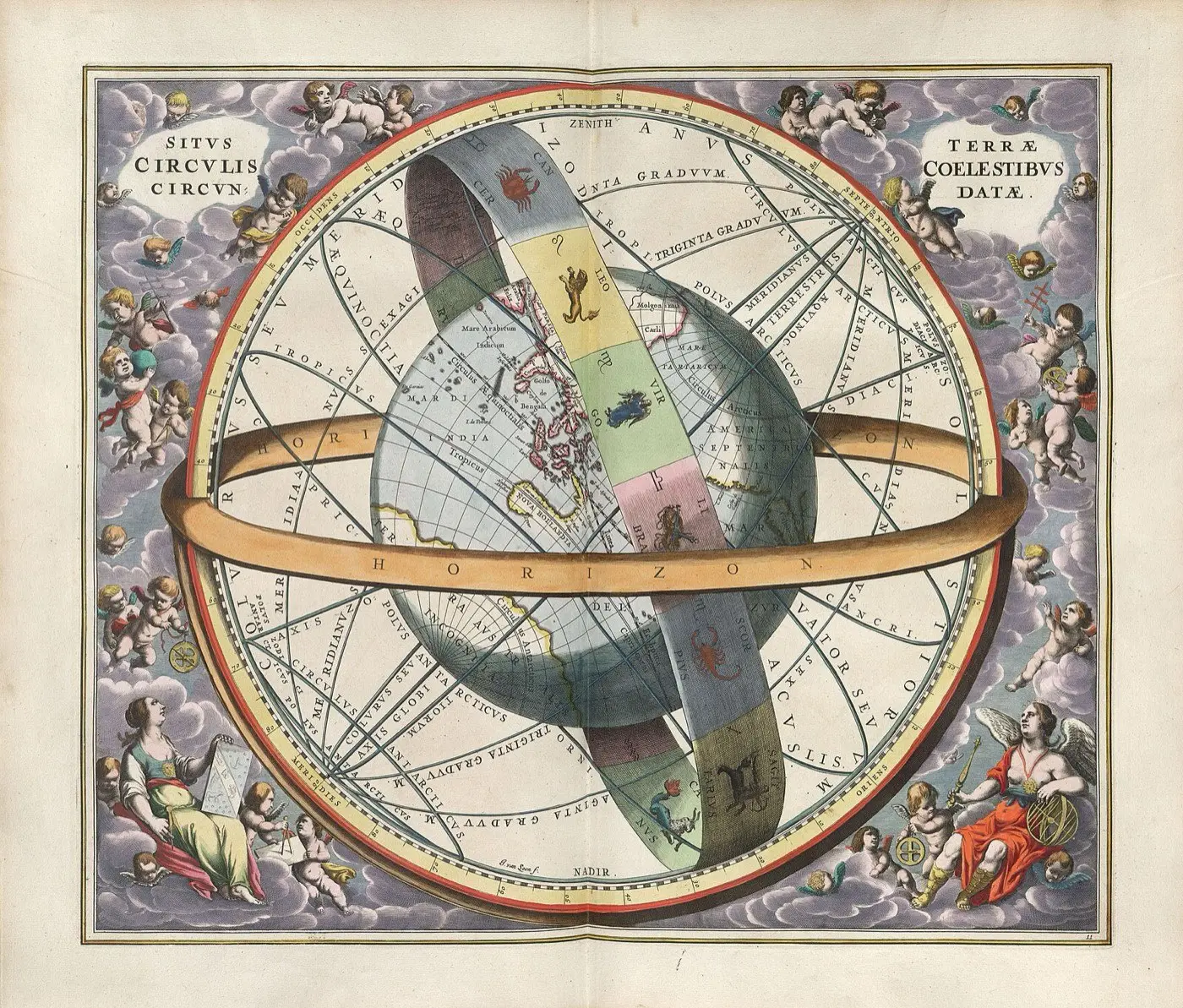
House chart astrology is the study of the twelve houses, the slices of a birth chart that map the areas of a life. If the signs are the how of astrology, the flavor a planet takes on, the houses are the where: the department of life a planet actually shows up in. A Venus in the sign of Leo tells you the style of your affections; a Venus in the tenth house tells you they play out in your career and public life. You need both halves to read a chart, and the houses are the half most beginners skip, which is a pity, because they are where astrology gets specific about your life rather than your personality.
There are twelve of them, numbered one through twelve, and unlike the signs they are not painted on the sky. They are built from the horizon at your birth, anchored to the ascendant, your rising sign, and they turn with the Earth through a full circle every day. That is the reason houses need an exact birth time when signs often do not, and it is the single most important thing to understand about them before the meanings make sense.
What house chart astrology means
At its root, house chart astrology takes the circle of your chart and divides it into twelve wedges, each a stage on which part of your life is played out. The first house begins at the eastern horizon, the point of your rising sign, and the rest follow around the wheel in order. When astrologers say a planet is in your fourth house or your seventh, they mean it falls in that wedge, and so it colors that area of life, home for the fourth, partnership for the seventh.
The houses are counted from the horizon, not from the start of the zodiac, which is why two people born on the same day can have the same planet in completely different houses. Your rising sign sets where house one begins, and everything else is measured from there. This is also why astrologers use a house system at all: there are several ways to divide the space between the angles, and while they agree on the broad picture, they can place a planet near a cusp in one house or the next. The meanings below hold whichever system you use.
Houses versus signs
It helps to keep the two straight, because beginners often blur them. A sign is a stretch of the zodiac, tied to the seasons and the stars, and it describes the character of whatever sits in it. A house is a stretch of your personal chart, tied to the horizon at your birth, and it describes the part of life whatever sits in it affects. Signs are shared by everyone born in the same few weeks; houses are yours alone, because they depend on your exact minute and place.
Put simply, the sign is the costume and the house is the room. A cautious Capricorn Moon behaves the same wherever it lands, but in the fourth house it plays out at home and with family, while in the tenth it plays out in your career and reputation. Reading a chart is largely a matter of asking, for each planet, what it is like, from the sign, and where it acts, from the house.
The twelve houses, one by one
Walking the wheel in order gives you the map. The first house is the self, the body and the first impression, the room your rising sign opens. The second is money, possessions and what you value. The third is communication, learning, siblings and short journeys. The fourth is home, family and roots, the private base of the chart. The fifth is creativity, romance, play and children. The sixth is daily work, routine, health and service, the ordinary machinery of a life.
Across the wheel the houses turn outward. The seventh is partnership, marriage and one-to-one relationships, sitting opposite the first. The eighth is shared resources, intimacy and deep change, the house of what we hold in common with others. The ninth is travel, higher learning, belief and the wider world. The tenth is career, public standing and vocation, the most visible point of the chart. The eleventh is friendships, groups and hopes for the future. The twelfth is the hidden house, of rest, retreat, the unconscious and what goes on behind the scenes. Together the twelve cover just about everything a life contains.
The twelve also fall into three groups by strength. The angular houses, the first, fourth, seventh and tenth, are read as the most active and prominent, the places where a planet makes itself felt. The succedent houses, the second, fifth, eighth and eleventh, are read as the stabilizing ones that consolidate what the angles begin. The cadent houses, the third, sixth, ninth and twelfth, are read as the adaptable, transitional ones. A planet in an angular house is given more weight than the same planet tucked into a cadent one, which is a quick way to gauge how loudly a placement speaks.
The angles that anchor the wheel
Four of the houses are special because they begin at the chart's four angles, the most sensitive points in the whole figure. The first house opens at the ascendant, the eastern horizon. The tenth opens at the midheaven, the highest point the zodiac reaches at your birth, tied to career and public life. The seventh opens at the descendant, the western horizon, read as how you meet a partner, and the fourth opens at the lowest point, the base of the chart, tied to home and origins.
These four angular houses, the first, fourth, seventh and tenth, are read as the load-bearing walls of a chart, and a planet sitting right on one of the angles is given extra weight. The whole frame turns together with the daily rotation of the Earth, which is why getting the birth time right matters so much: move the ascendant and you move all four angles and every house behind them. The rising sign guide covers how that eastern point is found, and the same calculation hands you the other three angles at once. For what the first house shows on the outside, how your rising sign shapes your appearance reads that same ascendant as the chart's visible surface.
Why birth time is essential for houses
This is the practical heart of it. The signs move slowly enough that your birthday usually fixes your Sun and often your other planets, but the houses ride on the ascendant, and the ascendant sweeps through all twelve signs in a single day, changing roughly every two hours. So the houses are the part of a chart most sensitive to the clock. An error of even half an hour can slide a planet from one house into the next, which can change the whole reading, moving your Venus from the house of home to the house of work.
Without a birth time, an honest chart leaves the houses open rather than guessing them. The planets and their signs are still correct, but the twelve rooms cannot be built, because there is no fixed horizon to build them from. This is why serious astrology always asks for the minute, and why your rising sign, explained spends so long on birth time: the rising sign and the houses stand or fall together.
How to find your house placements
To see your own houses you need the same three facts every chart needs, your date, your exact time and your place of birth. From those, a calculator locates the ascendant, lays the twelve houses out from it, and drops each of your planets into the room it belongs to. The birth chart calculator does this from real astronomy, and the rising sign calculator will settle the ascendant first if that is all you are after.
Once the houses are drawn, a chart starts to read like a life rather than a personality quiz. You can see which rooms are crowded with planets, the areas where a lot of your energy gathers, and which stand empty, the areas that simply run quietly. An empty house is not a lack; it means that part of life is not a headline for you. Read sign, planet and house together and the chart stops being a list of traits and becomes a map of where your story actually happens.
FAQ
Frequently asked questions
- What are the houses in astrology?
- The houses are twelve divisions of a birth chart, each standing for an area of life, from the self and money to partnership and career. Where the signs describe the manner of a planet, the houses describe the arena it acts in. A planet's house says which department of your life it colors most.
- How many houses are there?
- Twelve, matching the twelve signs but not the same as them. The houses are fixed to the horizon and the moment of birth rather than to the zodiac, so the same sign can span one house in your chart and a different one in someone else's, depending on the rising sign.
- What is the 7th house in astrology?
- The seventh house is the house of partnership: marriage, committed relationships, business partners and open dealings with others. It sits directly opposite the first house of the self, which is why it is read as the place where you meet other people as equals, one to one.
- How do I find my house placements?
- You need your date, exact time and place of birth, because the houses are built from the rising sign, which changes every couple of hours. A birth chart calculator locates the ascendant and lays the twelve houses out from it, then shows which house each of your planets falls in.
Sources
Terms in this piece
Read your own sky, not a generic one.
NovaOracles computes your full natal chart from real astronomy: your rising sign, your big three, every house and every aspect, personal to the minute you were born.
Get your full chart